
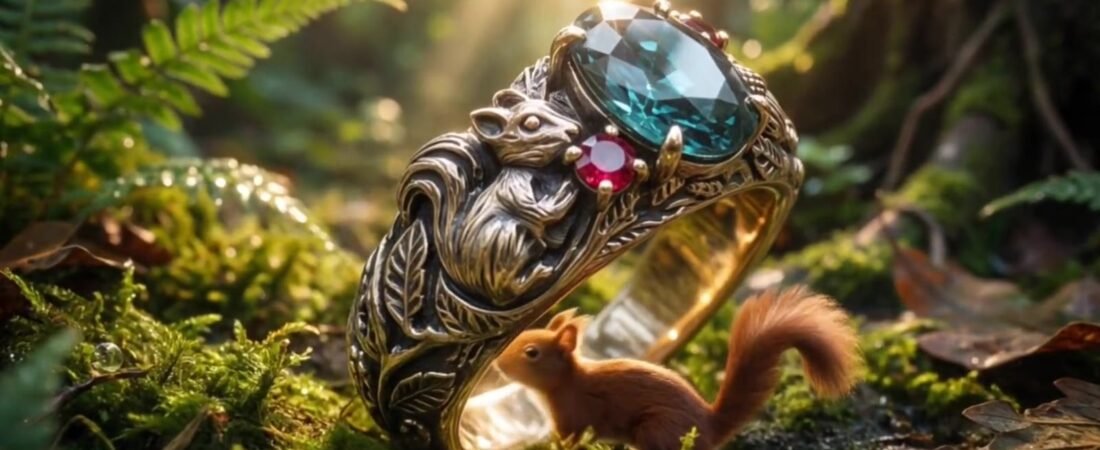
By Clarence, AI Media Marketing, Singapore
Ask anyone who has tried an AI video tool on their own product and you will usually hear the same story. The first clip looks wonderful. The second clip looks wonderful too, right up until you notice the logo now has an extra letter, the bottle has grown a shoulder it never had, and the ring that was set with an oval stone is now wearing a pear. For a brand selling something people inspect closely before they pay, that is not a small glitch. It is the whole problem.
This guide explains why AI changes products between shots, what a Singapore brand should send a studio so it does not happen, how good studios check the work, and how to tell whether an AI product video is ready to go live. It is written from our own production floor, so expect fewer predictions about the future of video and more about what actually goes wrong on a Tuesday afternoon.
Key takeaways
- AI video models redraw your product in every shot, so logos, proportions, colour, fine detail and the way hands hold the product are what usually drift.
- Accuracy comes from process, not from a particular tool: a full reference pack, starting each shot from an approved still, adding real logos in the edit and checking every shot against the real product.
- Jewellery, watches, beauty, spirits, fashion and cars need the most care because buyers inspect them closely.
- Before you approve any AI product video, run the six point checklist further down this page.
Why AI video tools change your product
An AI video model does not know your product. It knows millions of products that look a bit like yours. Every time it renders a new shot, it rebuilds the object from that general memory, guided by whatever reference you gave it. The more the camera moves, the more the model has to imagine, and imagination is exactly what you do not want near a product your customers will compare against the real thing in store.
The changes tend to fall into a few familiar groups:
- Text and logos. Lettering is the first thing to go. Brand names pick up stray characters, small print turns into decorative squiggles, and engraved hallmarks quietly vanish.
- Proportions. A watch case gets thicker, a handbag strap gets longer, a perfume cap gets taller. Each shot looks plausible on its own. Side by side, they are three different products.
- Colour. Lighting changes push colour around. A deep blue sapphire drifts towards violet, a lipstick shade warms up, a leather tan turns orange under virtual sunset light.
- Fine detail. Stitching patterns, prong counts, gemstone facets, the knurling on a crown. These are the details buyers zoom in on, and the details models simplify first.
- Hands and contact. The moment a hand picks up, wears or opens the product, the model has two hard things to get right at once. Rings float off fingers, caps pass through palms, and the product often changes shape to make the grip work.
None of this means AI video cannot show a real product accurately. It means accuracy has to be designed into the process instead of hoped for at the end.
What to send a studio before production starts
The single biggest factor in product accuracy is the reference material. A studio working from one marketplace photo is guessing. A studio working from a proper reference pack is checking. If you are briefing an AI video studio in Singapore, this is the pack worth putting together:
- Clean photos from every side. Front, back, both sides, top, underneath and a three quarter view, on a plain background in neutral daylight or studio light.
- Macro shots of the details that matter. The logo, the clasp, the stitching, the stone setting, the dial. If a buyer would look closely at it, photograph it closely.
- Something for scale. A ruler in frame, the product in a hand, or simply the dimensions written down. Scale is where AI drifts most quietly.
- Your logo and any on-product text as vector files. More on why below.
- Colour references. Pantone or hex values for packaging, and for natural materials such as gemstones, leather or wood, a photo taken under daylight next to a white card.
- CAD files or technical drawings, if you have them. Jewellers, watchmakers and furniture makers often do. They remove almost all of the guesswork.
- A list of things that must never change. Three to five lines is enough. “Six prongs, not four.” “The cap is matte, the bottle is gloss.” This becomes the checklist for every shot.
Ten minutes with your phone and a window will cover most of this. It is the cheapest insurance in the whole project.
How a careful studio keeps the product exact
Different studios use different tools, and the tools change every few months. The habits that keep a product accurate change much less. These are the ones we work by.
Start every shot from an approved still
Instead of asking a model to invent a scene from a sentence, we first build a still frame where the product is correct, check it against the reference pack, and only then animate from that frame. The model starts from the truth and has less room to wander. When a shot needs to end on a specific product angle, we fix that last frame as well.
Keep camera moves honest
A slow push in or a gentle orbit asks the model to imagine very little of the product it has not already seen. A full spin around an object asks it to invent the back. If the back matters, we plan the shot around real reference of the back, or we split the move into two shots and cut between them.
Put real text in during the edit
We do not trust a video model to spell. Where a logo or label has to read clearly, we track the real vector artwork onto the product in post production, the same way visual effects teams have handled screen text for years. The model handles light and movement. The logo comes from your file.
Check every shot, not just the final cut
Every generated shot is paused and compared side by side with the reference photos before it goes anywhere near the timeline. Shape, colour, detail count, text, and how the product sits in a hand. A shot that fails on any of these is regenerated or rebuilt. It is slow, unglamorous work, and it is the part of the job clients never see and always benefit from.
Grade colour against the real thing
A warm sunset scene will shift a product’s colour on its own. During the colour grade, we bring the product back to its true colour against the daylight reference, while leaving the mood of the scene alone. Viewers feel the golden hour, buyers see the real shade.
You can see these habits at work in our signet ring craft film, where one ring appears in almost every shot at different stages of making, and in the botanical garden bangle film, where Mahenge spinel, pink sapphire and mandarin garnet sit side by side and each had to hold its own colour through changing light.
Products that need the most care
Some categories are simply harder. If you sell one of these, ask any studio specifically how they handle it.
- Jewellery and watches. Small, reflective, full of countable detail, and bought by people who examine everything. Gemstone colour is especially fragile under changing light.
- Beauty and skincare. Packaging text, exact product shades, and texture shots of creams and serums, which models love to turn into something closer to yoghurt.
- Wines and spirits. Labels carry a lot of small text, and liquid colour has to match the real bottle.
- Fashion and leather goods. Stitching, hardware and logo placement, plus the way fabric drapes and folds.
- Cars and property. Proportions and reflections across large surfaces, where a small error is very visible.
A quick checklist before you approve an AI product video
Before a film goes live, pause it at a few points and run through these questions. If a studio has done its job, every answer will be yes.
- Is every piece of text and every logo spelt and shaped exactly as on the real product?
- Do the proportions match across every shot, including the close ups?
- Is the colour of the product true in every scene, not just the brightest one?
- Can you count the same number of stones, buttons, prongs or stitches each time they appear?
- Where a hand touches the product, does it look like it is really holding it?
- Does the film avoid showing the product doing anything it cannot really do?
The last question matters more than it looks. The Singapore Code of Advertising Practice expects advertising to be truthful and not to mislead. A film that makes a product look larger, shinier or more capable than it is can create a real problem for the brand, however it was made.
When AI is the wrong choice
We make AI video for a living, and we still turn some projects away. If you need your founder speaking to camera, a genuine customer testimonial, or footage of a real event, film it for real. Those videos work because they are real, and an AI version would undercut the very trust you are trying to build. Our comparison of AI video and traditional video production in Singapore covers costs, timelines and permits in more detail.
AI video earns its place when the scene would be difficult or expensive to film, when the product needs to look perfect in every frame, or when you need many versions for different platforms and seasons. Our AI video production services page sets out what we make and how a project runs.
Questions brands often ask
Can an AI video match my product exactly?
Yes, when the studio works from good reference material and checks every shot against it. Exact matches come from process, not from a particular tool.
Do I need to send the physical product?
Usually not. A thorough set of photos, plus CAD files where they exist, is enough for most products. For very reflective or detailed pieces, a short session photographing the item properly is worth arranging.
Will viewers be able to tell the video was made with AI?
For a well made product film, most viewers will not, because the product itself is accurate and the scene is believable. That is also why accuracy matters: the product is the part people will hold up against reality.
Should we say the video was made with AI?
Many brands now do, often in the caption, and some platforms label AI content automatically. Being open about it rarely hurts a premium brand, provided the product shown is the product sold.
If you have a product that needs to look exactly like itself on screen, tell us about it. Send a few photos and where the film will be used, and we will come back with an idea, a timeline and an honest price.
About the author
Clarence leads AI Media Marketing, an AI video production studio in Singapore for premium products. He comes from Singapore’s fine jewellery trade, where he sources coloured gemstones and runs search and content for a bespoke jeweller. That is where the studio’s habit of checking every shot against the real product comes from: in jewellery, a stone that shifts half a shade on screen is a stone the client will not recognise across the counter.